Article: Google Ads vs. Facebook Ads: Which Is Better for Your Business?
Google Ads vs. Facebook Ads: Which Is Better for Your Business?
Google Ads vs. Facebook Ads: Which Is Better for Your Business?
When businesses decide to advertise online, one of the first questions they ask is whether they should invest in Google Ads or Facebook Ads. Both platforms are powerful marketing tools, but they work in different ways and serve different purposes.
Understanding the strengths of each platform can help you choose the right strategy—or determine whether using both together is the best option.
How Google Ads Works
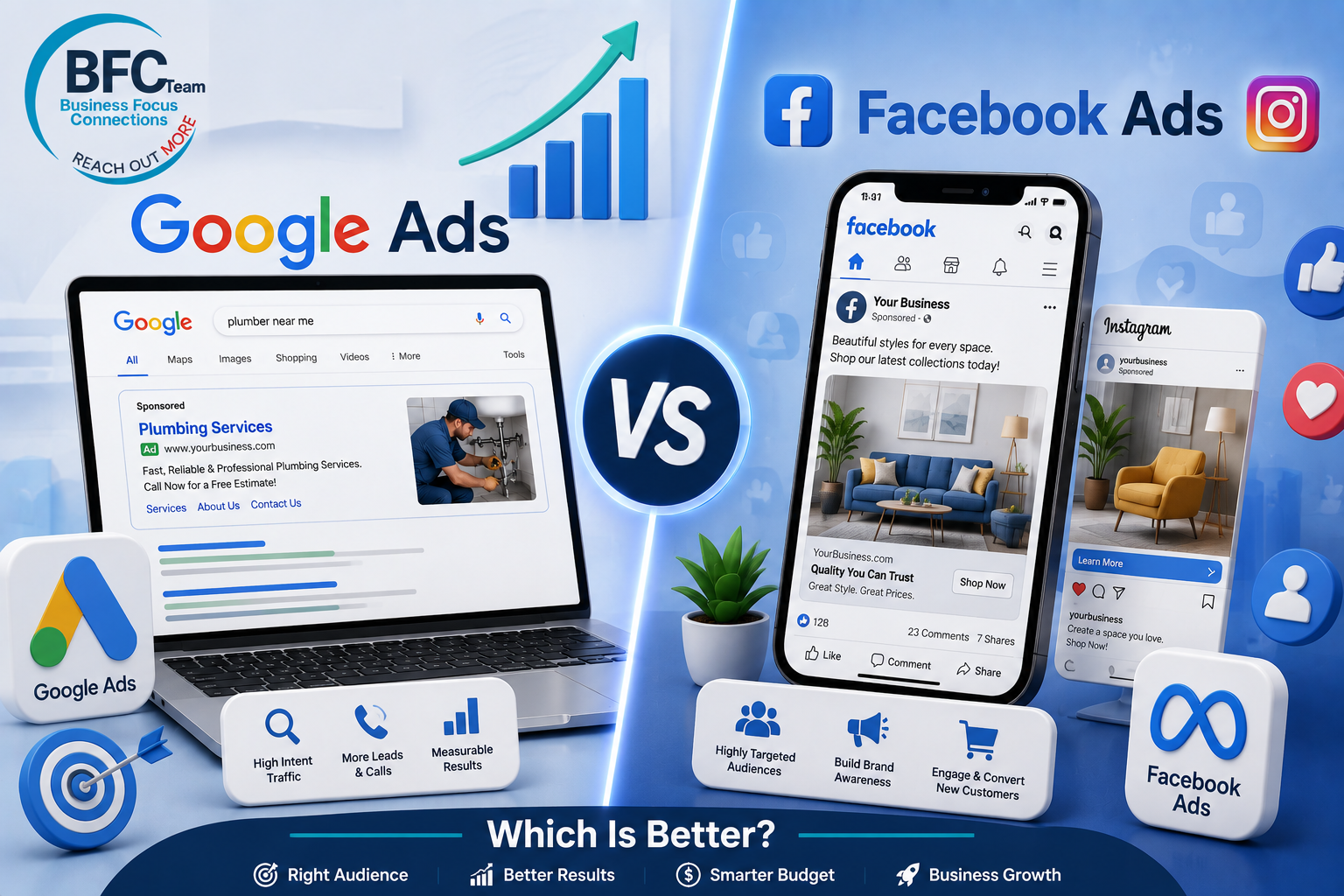
Google Ads displays your business when people actively search for products or services.
For example, someone may search for:
- Furniture store near me
- Plumber in Memphis
- Hair salon nearby
- Digital marketing agency
These users already have intent. They're looking for a solution, making Google Ads an excellent platform for generating leads and sales.
How Facebook Ads Works
Facebook Ads (including Instagram) place your business in front of users while they browse their social feeds.
Instead of responding to an active search, Facebook introduces your business to people based on:
- Interests
- Demographics
- Behaviors
- Location
- Online activity
This makes Facebook ideal for creating awareness and generating interest.
Google Ads Benefits
Google Ads is a strong choice because it allows you to:
- Reach customers actively searching for your services
- Generate high-quality leads
- Target specific keywords
- Advertise locally or nationally
- Measure detailed campaign performance
For businesses that depend on phone calls, appointment requests, or immediate purchases, Google Ads often delivers excellent results.
Facebook Ads Benefits
Facebook and Instagram Ads are excellent for:
- Building brand awareness
- Promoting products
- Showcasing services
- Reaching new audiences
- Retargeting website visitors
- Growing social engagement
The visual nature of Facebook and Instagram makes them especially effective for businesses with attractive products or strong visual content.
Which Costs More?
Both platforms allow flexible budgets.
The total cost depends on factors such as:
- Competition
- Industry
- Audience
- Location
- Campaign quality
Instead of asking which platform is cheaper, focus on which one delivers the best return on your investment.
Which Businesses Benefit Most?
Google Ads is ideal for:
- Home service companies
- Contractors
- Medical practices
- Attorneys
- Local businesses
- Professional services
- Emergency services
These businesses benefit from reaching customers who are already searching for help.
Facebook Ads is ideal for:
- Retail stores
- Restaurants
- Furniture stores
- Clothing boutiques
- Beauty businesses
- Event promotions
- New product launches
Businesses with strong visuals and promotional offers often perform well on Facebook and Instagram.
Why Many Businesses Use Both
Google Ads and Facebook Ads are not competitors—they complement each other.
A customer might first discover your business through a Facebook or Instagram ad, then later search for your company on Google before making a purchase.
Using both platforms together allows you to:
- Increase brand awareness
- Stay visible during the buying journey
- Reach customers at different stages
- Generate more leads
- Improve overall marketing performance
Which Platform Is Right for You?
Choose Google Ads if your goal is:
- More phone calls
- More leads
- More appointment requests
- Higher search visibility
- Immediate customer intent
Choose Facebook Ads if your goal is:
- Brand awareness
- Product promotion
- Community engagement
- Growing your audience
- Visual storytelling
For many businesses, the strongest results come from using both platforms as part of a complete digital marketing strategy.
Why Reach Out More?
At Reach Out More, we create customized Google Ads and Facebook & Instagram advertising campaigns designed to help businesses attract qualified leads, increase sales, and maximize their marketing budget. Every campaign is tailored to your business goals, target audience, and industry.